Metal Roofing Installed to Manufacturer and Code Standards
Metal roof installation and repair in Fairburn for homeowners seeking long-term performance over repeated shingle cycles
What changes most noticeably after a standing-seam or metal panel roof is correctly installed is the elimination of the shingle replacement cycle entirely for the foreseeable future. Southside Roofing installs and repairs standing-seam and metal panel roofs for residential homes in Fairburn, handling both the structural installation and the finishing details—trim at edges, valleys, and penetrations—that determine how a metal system performs over time. Metal roofing is increasingly chosen by homeowners across the Atlanta residential market who have been through one or two shingle replacements and are prioritizing longevity and a roofline that reads differently from the standard neighborhood profile.
Installation begins with measuring and designing the metal roof system to the specific geometry of the home, selecting panel or standing-seam configuration, and installing appropriate underlayment before any metal goes down. Southside Roofing secures panels according to manufacturer specifications and local code requirements, which govern both fastener pattern and panel attachment method for wind resistance. Permitting and inspections are handled as part of the project scope. The five-year workmanship warranty covers metal installations on the same terms as shingle work.
Request a metal roofing estimate from Southside Roofing based on your home's current roof structure and your material preference for panel or standing-seam configuration.
The Difference Between Correct and Shortcut Metal Installation
Metal roofing underperforms when the installation misses two specific details: underlayment selection and fastener technique. The underlayment beneath a metal system must be rated for the higher surface temperatures that metal panels reach, and it must be applied without wrinkles or gaps that allow the metal to oil-can—flex and ripple—across the span. Fasteners on exposed-fastener panel systems must be driven to the correct torque so the neoprene washer seals without being compressed to the point of deformation, which causes early washer failure and the first source of leaks on an otherwise intact panel. Standing-seam systems avoid exposed fasteners entirely, with panels clipped to the structure and seamed at the joint, removing that failure point.
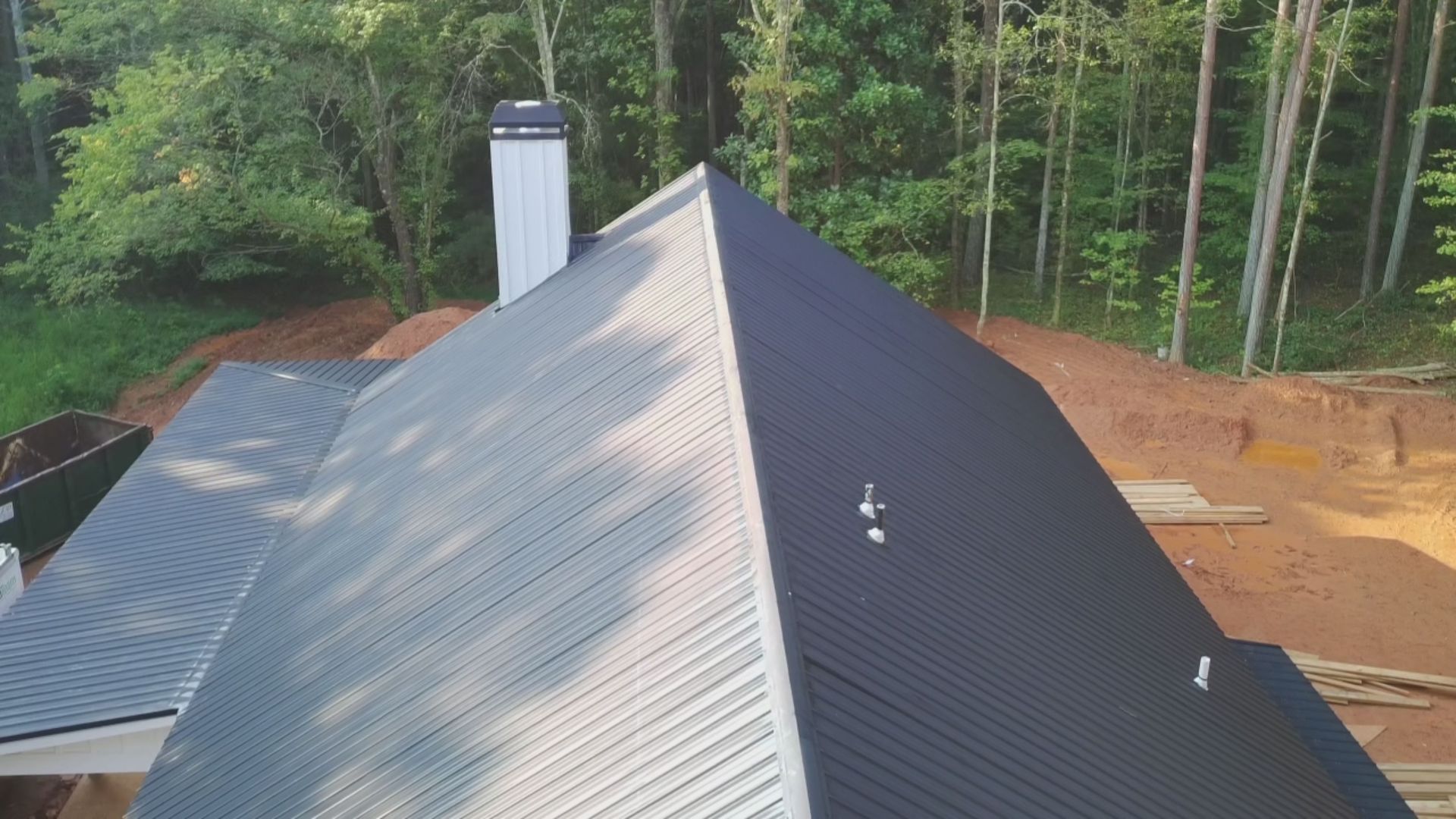
After Southside Roofing completes a metal roof installation, the finished surface shows consistent panel alignment with no oil-canning across spans, fully formed seams on standing-seam systems, and trim pieces at ridges, rakes, and eaves that sit tight without gaps. Penetration boots and flashing are sealed with metal-compatible materials rather than generic roofing caulk, which would fail as the panel thermally cycles. Palmetto properties in the service area include residential homes where metal roofing is replacing aging three-tab shingle systems, and the installation on those homes requires attention to the original rafter spacing, which affects which panel width and clip spacing perform correctly for that structure.
The choice between panel and standing-seam systems involves trade-offs in cost, maintenance interval, and aesthetic. Exposed-fastener panel systems carry a lower installation cost and are appropriate for lower-slope applications when fastener maintenance is planned; standing-seam systems eliminate the fastener exposure point entirely and are specified when the priority is minimizing long-term maintenance. Southside Roofing handles both and advises on which system fits the home's structure and the owner's priorities.
Questions Before Starting Your Project
These questions address how metal roofing installation is approached, what separates quality work from installation shortcuts, and what property owners should understand before the project begins.
What underlayment is required beneath a metal roof and why does it differ from what goes under shingles?
Metal roofing surfaces reach significantly higher temperatures than shingles, which requires a high-temperature-rated synthetic underlayment that does not off-gas or degrade at those temperatures, since standard felt underlayment can break down and transfer residue to the underside of the panel over time.
How is the panel or standing-seam system selected for a specific home?
The roof pitch, existing rafter spacing, and the homeowner's maintenance preference all factor into the selection: lower pitches favor panel systems with appropriate sealant at the laps, while steeper pitches open the full range of standing-seam profiles that clip to the structure without exposed fasteners.
What does the permitting process involve for a metal roof installation in Fairburn?
Metal roofing installations require a building permit and, depending on whether the existing decking is being replaced, a structural inspection confirms the substrate meets load and fastening requirements before the finished system is approved.
How is flashing handled at chimneys and penetrations on a metal roof differently than on a shingle roof?
Metal roof flashing is formed to the panel profile and integrated with the seam or clip system rather than layered over it, and the sealants used are specifically rated for metal-to-metal or metal-to-masonry contact so thermal movement does not break the seal at those junctions.
What are the visible indicators that a metal roof installation was completed to the correct standard?
Uniform panel alignment without rippling across the span, fully closed seams on standing-seam systems with no open joints, trim pieces seated flush at all edges, and penetration boots that sit tight against the panel surface with no visible sealant bridging gaps are the primary quality indicators on a finished installation.
Southside Roofing also installs metal roofing in Union City, College Park, Palmetto, Riverdale, and Peachtree City. If you are evaluating metal roofing as a replacement for an aging shingle system, connect with Southside Roofing to review panel and standing-seam options relative to your home's specific structure and your long-term maintenance priorities.