
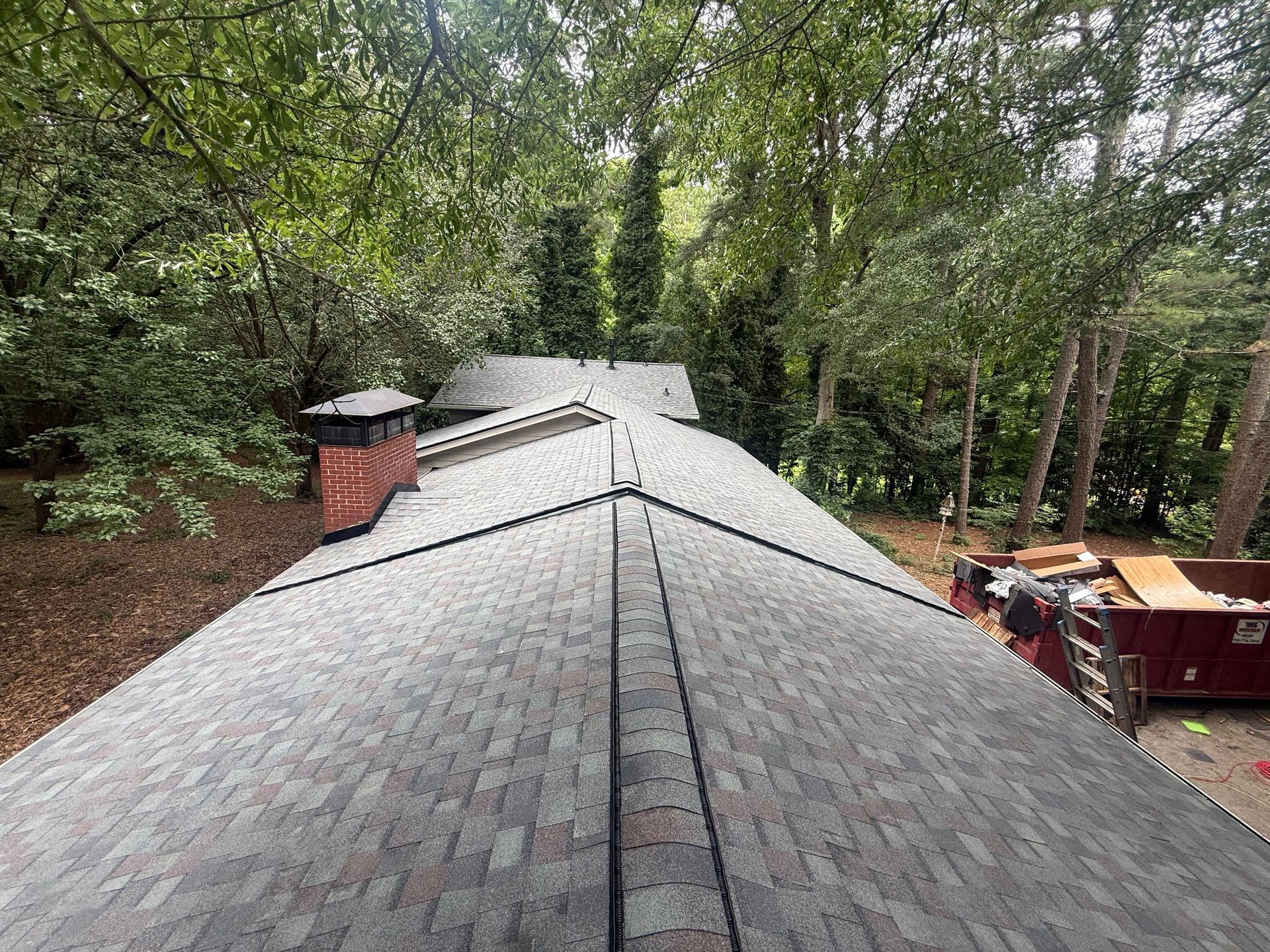
Low-Slope Roofs Built to Shed Water Reliably
Flat roofing in Fairburn for ranch homes and additions where improper pitch or failed membranes cause pooling and interior damage
Low-slope construction is common throughout Fairburn's residential stock, particularly in ranch homes built from the 1950s onward and in rear additions added to older properties where maintaining steep pitch was not structurally practical. These roof sections depend entirely on material selection and installation method to move water, because there is no pitch doing that work for them. When the membrane fails or was installed incorrectly from the start, water pools at low points, accelerating degradation and eventually forcing its way into the structure below. Southside Roofing installs and maintains low-slope residential roofs with material choices matched to the roof's exposure and exact pitch.
Material selection for a low-slope roof is not one-size-fits-all. Pitch, surface exposure, penetration count, and whether the roof is accessible or occupied below all influence which membrane system performs reliably over time. Southside Roofing's work is restricted to residential low-slope applications, which means the evaluation and installation process is focused on the conditions and failure patterns specific to that building type rather than adapted from commercial flat roofing practice.
Arrange an on-site evaluation with Southside Roofing to assess your current low-slope roof condition and identify which repair or replacement approach fits the structure.
Why Low-Slope Roof Failures Follow Predictable Patterns
Most low-slope roof failures on residential properties concentrate at three locations: penetrations such as vent pipes and HVAC curbs, seams where membrane sections overlap, and perimeter edges where the membrane terminates at a wall or fascia. These are the points where installation shortcuts show up first, and they are also the locations where a proper installation uses additional flashing or reinforcement to compensate for the stress concentration. Inspecting and maintaining these areas specifically—rather than treating the field of the roof as the primary concern—is how low-slope roof life is extended rather than just monitored.
After a properly executed installation or repair, the visible change is straightforward: water moves to the drain or roof edge without pooling. You can verify this by observing the roof surface during or after rain, looking for standing water that remains more than 48 hours after precipitation stops. Persistent pooling after a repair indicates either that the low point was not addressed or that the drain or scupper is partially blocked—both are identifiable and correctable conditions.
Noonan-area properties with flat-roofed additions are among the residential situations where choosing the correct membrane thickness and seam method makes the difference between a ten-year and a twenty-year service life. Southside Roofing's residential-only scope means every material decision is calibrated to the loads, access conditions, and maintenance patterns of a single-family property rather than a commercial building with different usage and inspection expectations.
Answers About How the Work Is Done
The questions below address how low-slope roofing decisions are made, what the installation involves at key failure points, and how you can assess whether the finished work is performing correctly.
How does material selection for a low-slope roof differ from a pitched roof?
On a low-slope surface, the membrane must form a continuous waterproof layer rather than relying on shingled overlap and pitch to shed water. The choice between modified bitumen, TPO, or other systems depends on pitch measurement, penetration layout, and whether the surface receives foot traffic for maintenance access.
What causes seam failures on residential flat roofs?
Seams fail when adhesive or heat-welding is applied to a damp, dirty, or improperly primed surface, or when seam width is below specification. A seam that appears sealed visually can still lift under thermal expansion if it was not bonded across its full width at installation.
How are penetrations flashed on a low-slope residential roof?
Each penetration receives a boot or curb flashing that extends under the membrane by a specified overlap distance, with the membrane brought up and over the flashing base. Relying on sealant alone at a pipe penetration without mechanical attachment to the membrane is the shortcut that produces recurring leaks at that location.
What should you look for in a completed low-slope roof repair to confirm it is holding?
The repaired section should lie flat against the surrounding membrane with no visible edge lifts or bubbles. At seams, the overlap should be uniform and fully adhered across its width. Pooling water that drains completely within 48 hours indicates the surface geometry was maintained correctly during the repair.
Why does Fairburn's residential construction mix matter when selecting a repair approach for a flat roof section?
Ranch homes and additions in this area were built across several decades using different deck materials—some on board sheathing, others on plywood or OSB. The deck condition and type affect which adhesives bond reliably and whether a full tear-off or overlay is the correct approach, which is why the evaluation precedes any material commitment.
Southside Roofing also performs flat roofing work in Palmetto, College Park, Union City, Riverdale, and Peachtree City. To discuss your low-slope roof conditions and schedule an evaluation, contact Southside Roofing at (678) 274-2686.